Horizontal Directional Drilling Services

Your Trusted Horizontal Drilling Contractor for Telecommunications, Electrical, and Water & Sewer Infrastructure.

Get A Free Estimate

Need horizontal directional drilling services for your next project? Fill out the quick form below to get started.

    Some of our clients:

    What Is Horizontal Directional Drilling (HDD)?

    Horizontal Directional Drilling is a trenchless method for installing conduit, cable, or pipe beneath roads, rail lines, rivers, or buildings — without disturbing the surface. AVERTEX has decades of experience delivering underground horizontal drilling across Canada with a proven track record for accuracy, safety, and efficiency.
    Whether you’re laying new fibre optic lines, upgrading electrical networks, or installing large watermains, horizontal directional drilling lets you get the job done right with less mess than traditional excavation.

    How Horizontal Directional Drilling Works

    1. Locate & Plan – We identify all utilities with locates and daylight crossings.
    2. Pilot Bore – Drill head follows a planned path guided by our tracking system.
    3. Reaming – Borehole is enlarged to fit pipe or duct bundle.
    4. Product Pullback – Pipe or conduit is pulled through, ready for connection.
    5. Testing & Proofing – We ensure integrity through swabbing, mandrels, and hydrotesting as required.

    What We Drill

    Material

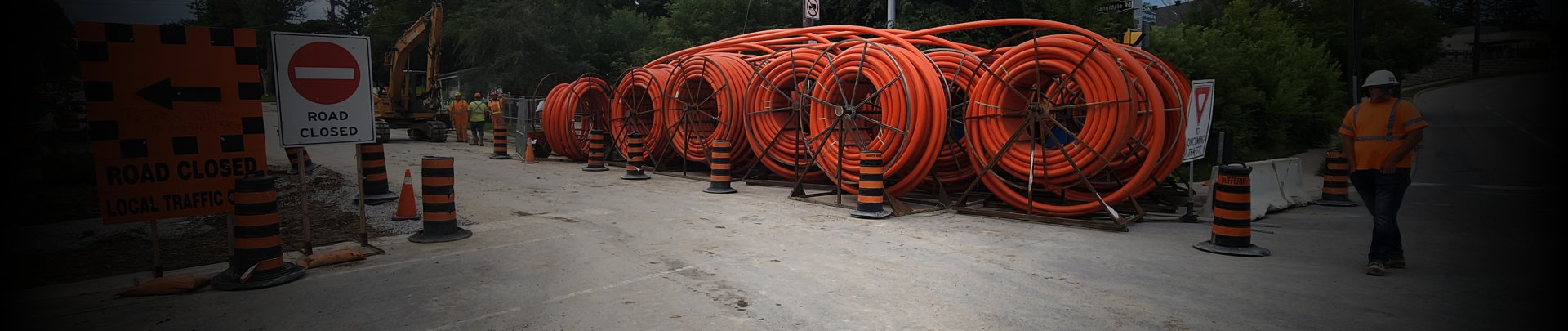
    HDPE PVC (lockable/fusible) Cable Conduits

    Typical Size Range

    32mm to 1200mm (1 ¼” to 48”) Up to 400mm (standard in water & sewer) Bundled or single installation

    Why Choose AVERTEX as Your Horizontal Directional Drilling Contractor?

    AVERTEX is the horizontal boring contractor Canadian utilities call when timelines are tight and tolerances are strict.
    How Horizontal Directional Drilling Works
    • Capacity across the spectrum. Shots from a few metres to 600 m; diameters from 32 mm to 1,200 mm, depending on rig class.
    • Material expertise. HDPE, PVC, Fusible PVC.
    • Proven in Canadian ground. Clay, silt, and even dolomite bedrock are managed by matching drill heads and reamers to geology. We understand local soil, permit processes, and weather challenges.
    • Safety that never slips. COR procedures, full traffic-control plans, and daylighting of every crossing prevent strikes and stoppages.
    • Advanced Locating Equipment – DCI F5 systems ensure precise installs.
    • Capability You Can Trust. Clients re-hire us because we keep our word — schedule, budget, and finished quality.

    Find out how horizontal directional drilling can work for your next utility project.

    Rig Fleet & Capabilities

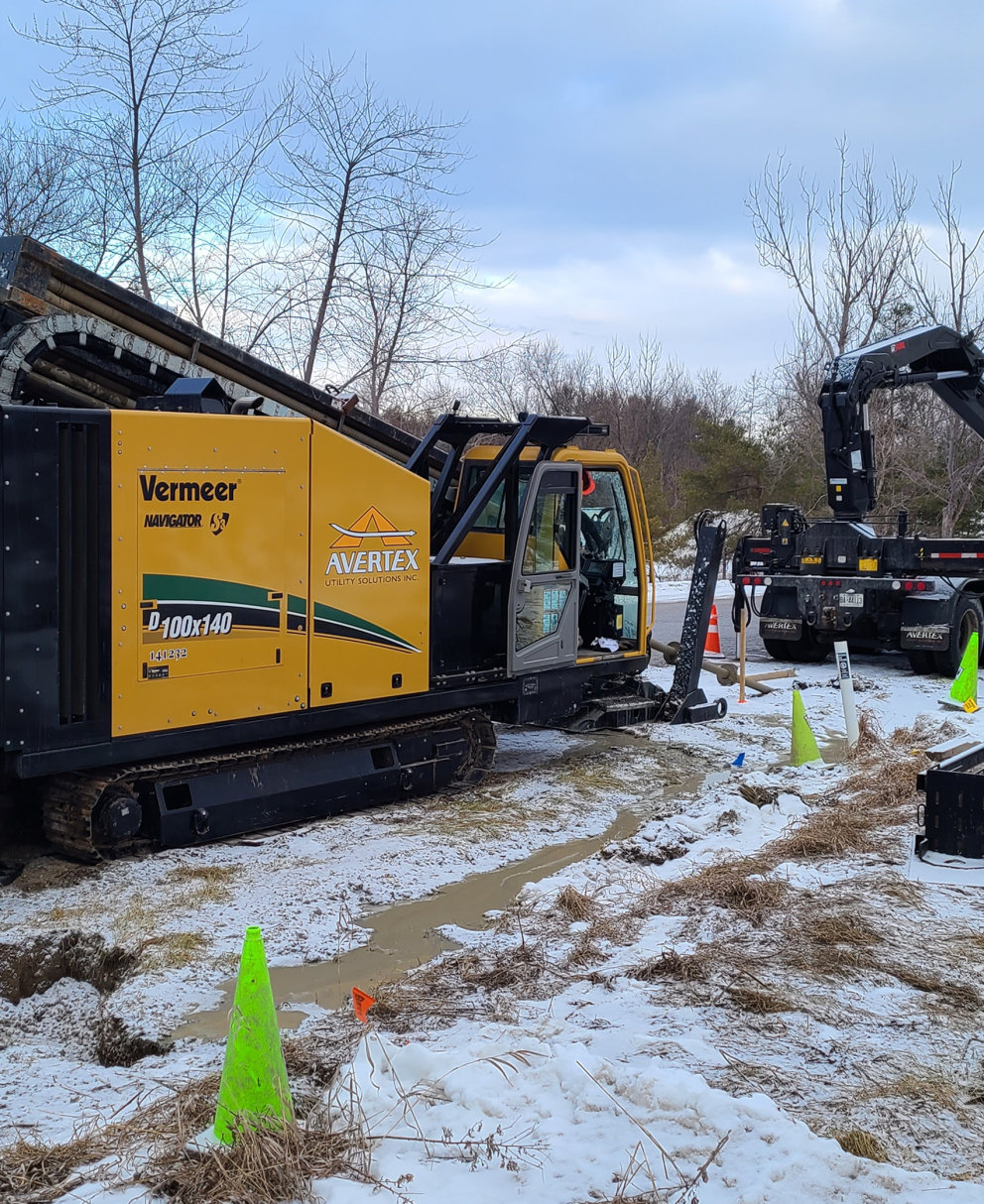
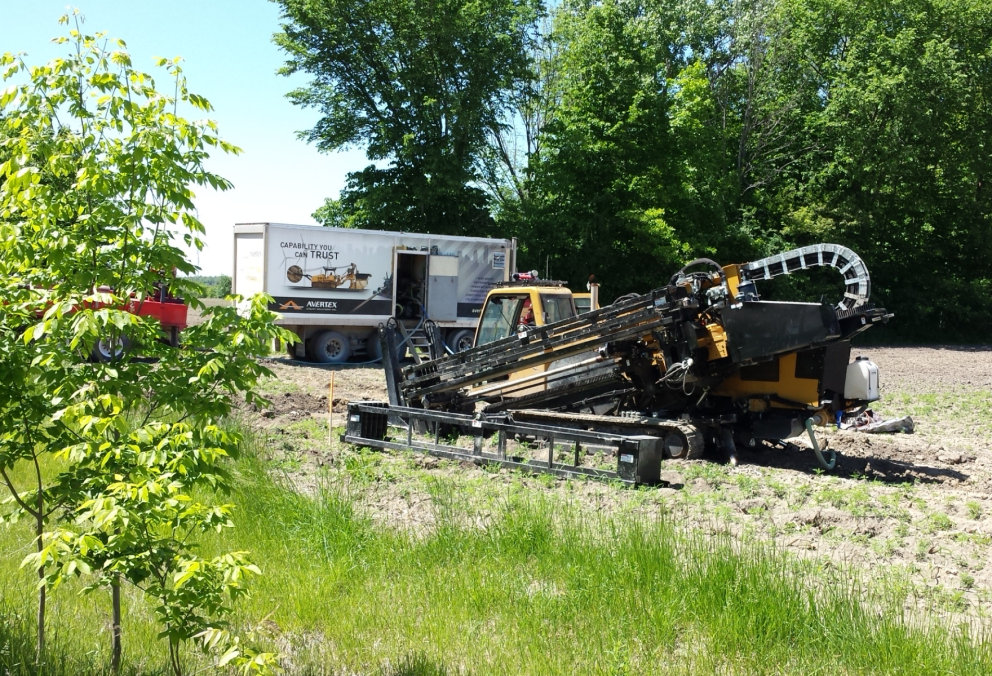
    We operate a diverse fleet of Vermeer drill rigs, ranging from small to large, all staffed by experienced operators and equipped with the latest DCI F5 locating systems.
    Available HDD Fleet
    • Vermeer D8x12
    • Vermeer D10x15 (multiple units)
    • Vermeer D20x22
    • Vermeer D24x40 (multiple units)
    • Vermeer D40x50 (multiple units)
    • Vermeer D100x140 (multiple units)

    Rig Size

    Small (10k lbs)
    Medium (24k–100k)
    Large (100k+ lbs)

    Capacity

    Services, short shots
    Most utility jobs
    Major crossings, deep installs

    Max Bore Length

    ~50m
    Up to 300m
    Up to 600m

    Max Diameter

    150mm
    750mm
    1,200mm

    Max Depth

    ~5m
    Up to 20m
    Up to 27m

    We adapt the drill head and reamer based on soil type, whether soft clay or mixed cobble. Need to drill under a river or highway? We’ve done it.

    HDD Across Industries: Built for Your Sector

    Common Uses: Fibre-to-the-home (FTTH), backbone fibre networks, telecom duct banks
    Typical Rig Size: Small to medium (10,000–30,000 lbs)
    Pipe Size & Material: 32–150mm HDPE, often bundled; flexible and non-metallic

    Key Considerations:

    • Fast, shallow bores in congested urban corridors
    • Minimal surface disruption makes HDD ideal for city streets and residential areas
    • Avoids existing underground infrastructure through careful locates and daylighting
    • Compact rigs and multiple small crews = high efficiency for fibre expansion

    More About this Sector

    Common Uses: Watermains, forcemains, gravity trunk sewers Typical Rig Size: Medium to large (40,000–120,000 lbs) Pipe Size & Material: 150–900mm HDPE or Fusible PVC Key Considerations:
    • Water: Pressure pipes = more flexible design, no need for consistent slope
    • Sewer (Gravity): Demands precise grade (1–2% slope); best practice tolerances of any HDD application
    • Engineered bore plans and tensile load calculations when required
    • Post-install testing includes hydrostatic testing for water and CCTV inspections for sewer
    More About this Sector
    Common Uses: Underground ducting for medium- and high-voltage power lines Typical Rig Size: Medium (24,000–40,000 lbs); larger rigs for long or high-voltage runs Pipe Size & Material: 50–250mm HDPE or PVC; non-metallic to avoid electrical interference Key Considerations:
    • Requires attention to cable spacing and soil thermal properties to prevent overheating
    • Often deeper than telecom for added safety and clearances
    • No steel casings in long runs — HDPE preferred for insulation and flexibility
    • Thermal analysis may be required for high-voltage installs
    More About this Sector

    AVERTEX in Action

    Featured Project

    Tottenham Water Transmission Main

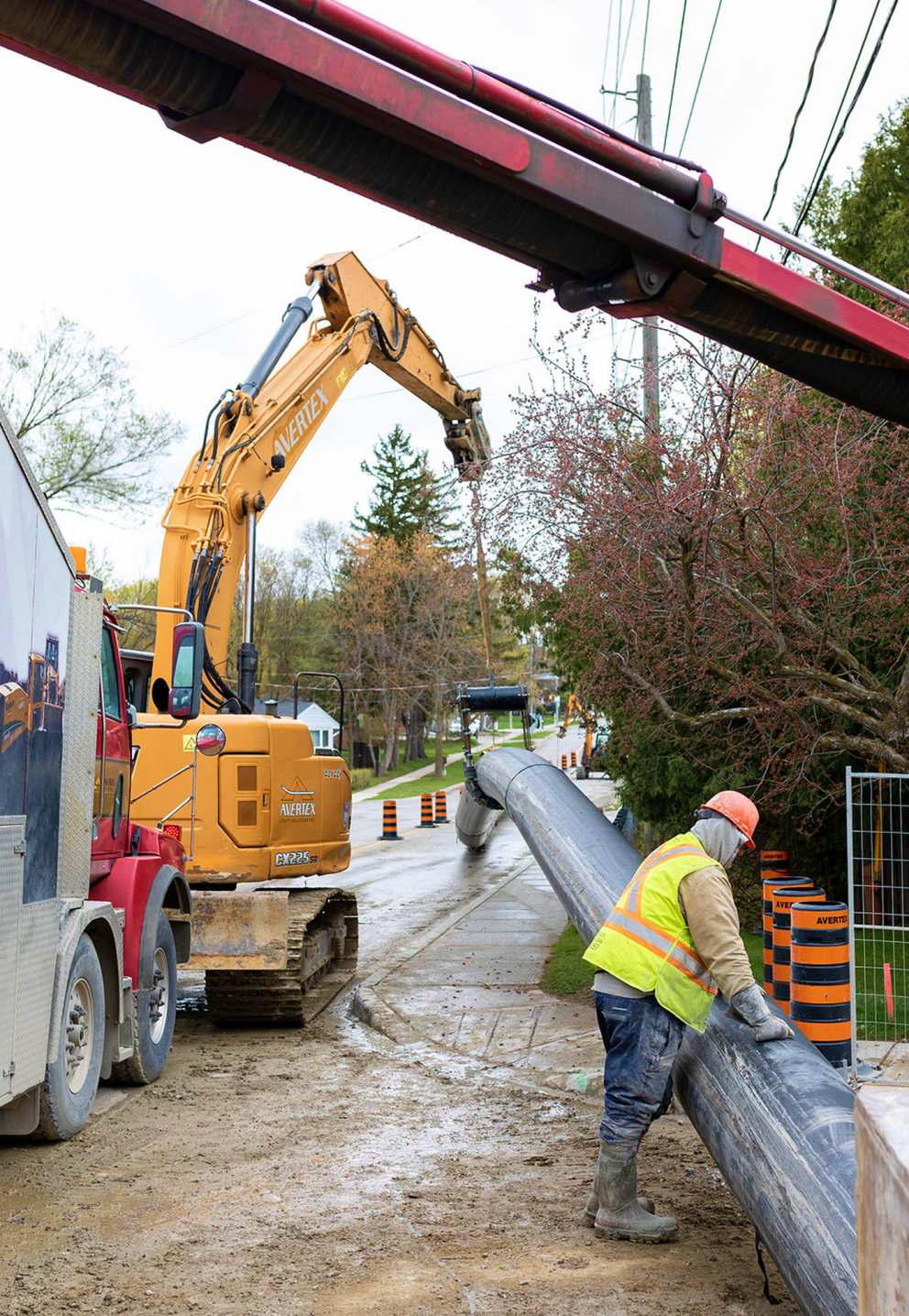
    AVERTEX successfully installed 9,000 metres of 450mm HDPE DR11 watermain, along with 19 specialized chambers, connecting the communities of Tottenham and Beeton with a secure, long-distance water transmission solution.
    Scope: Large-scale horizontal directional drilling and open-cut installation Location: New Tecumseth, Ontario

    Our Commitment to Safety & the Environment

    At AVERTEX, we don’t cut corners, especially when it comes to protecting workers and respecting the environment and communities we work in.

    ​Safety is built into everything we do.

    We work to limit surface disruption and protect the environment

    Frequently Asked Questions

    1. What types of projects is horizontal directional drilling best suited for?

    Horizontal directional drilling is ideal for installing pipes, cables, or conduits under roads, rivers, railways, driveways, and other obstacles — without digging a trench. It’s commonly used in telecommunications, electrical utility work, and water or sewer installations.

    2. Can you drill through rock or tough ground conditions?

    Yes. While soft to medium soils like clay or silt are preferred, our crews are experienced in drilling through harder conditions, including dolomite limestone bedrock. We adjust our drill heads and reamers based on the geology.

    3. How deep or long can your directional drilling go?

    It depends on the rig used. Our large rigs can handle bore lengths up to 600m and depths up to 27m (90 ft). We match the right rig to the job for safe and efficient results.

    4. Do you handle permits and utility locates?

    We manage Road Occupancy Permits (ROP) and always handle the utility locate requests. However, Municipal Consent (MC) permits are often part of the client’s engineering scope.

    5. What kinds of pipes or conduits can you install with horizontal directional drilling?

    We install HDPE, PVC, and fusible PVC pipes, as well as bundled conduits for telecom or power. Sizes range from 12mm (1/2”) up to 1200mm (48”), depending on the project.

    6. How do you make sure you don’t hit existing utilities?

    Before any drilling, we request locates and expose (daylight) all known crossings. We also monitor the drill path in real time and track the reamer closely if it passes near another utility.

    7. Is horizontal directional drilling more expensive than trenching?

    Not always. Horizontal directional drilling can reduce restoration costs and project timelines by avoiding road cuts or major disruptions. It’s often the most cost-effective and least invasive option for complex or high-traffic areas.

    Let’s Talk About Your Next Project

    Whether you’re a municipality, utility owner, or contractor, we’re here to help you get the job done right. Looking for a reliable underground horizontal drilling contractor in Canada? We can help.